
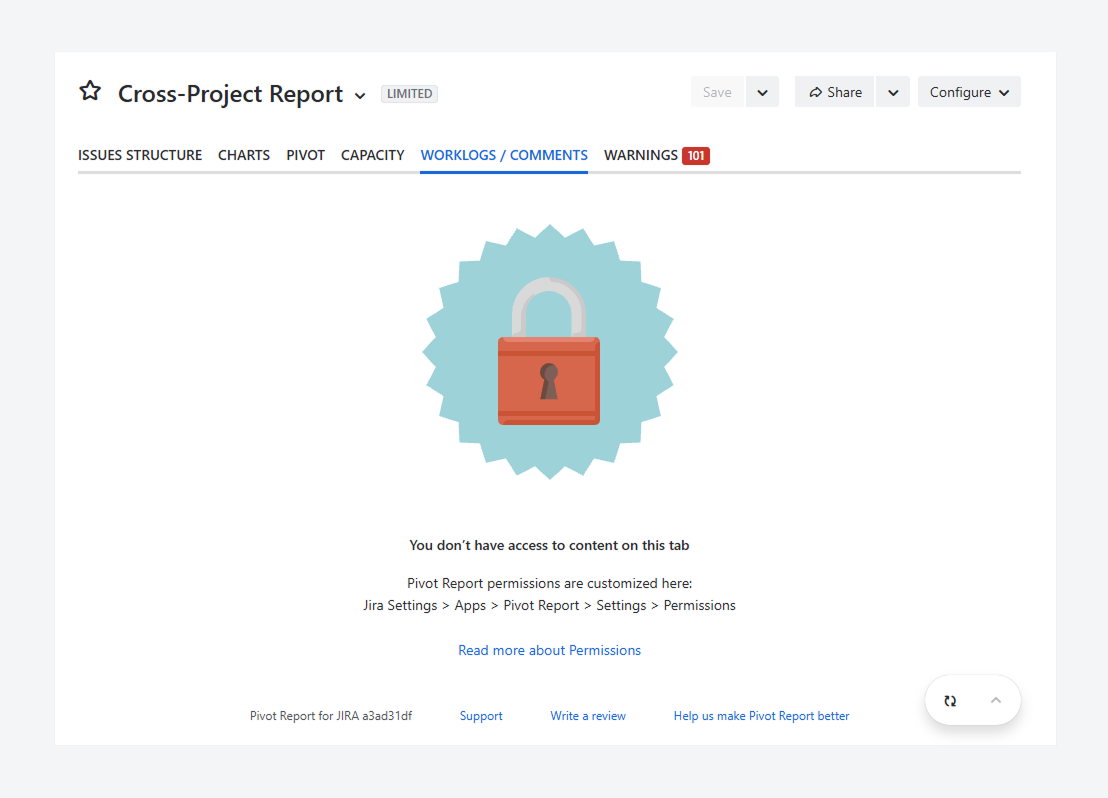
This article explains how to verify whether a user can view the contents of the Worklogs tab type.
Who can hide the contents of this tab type?
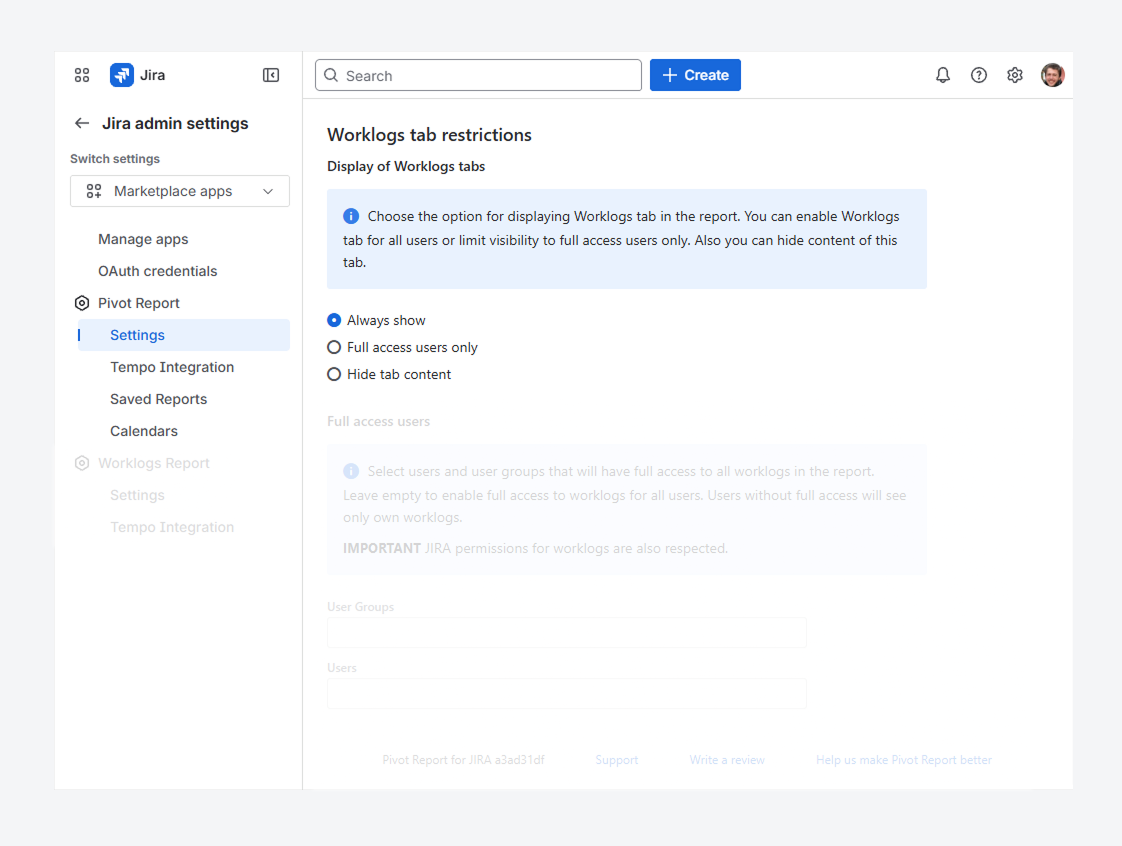
Jira admins can hide the contents of the Worklogs tab type either for all users or for specific users by configuring the app-level settings, which are shown below.
How can you tell if the tab’s content is hidden?
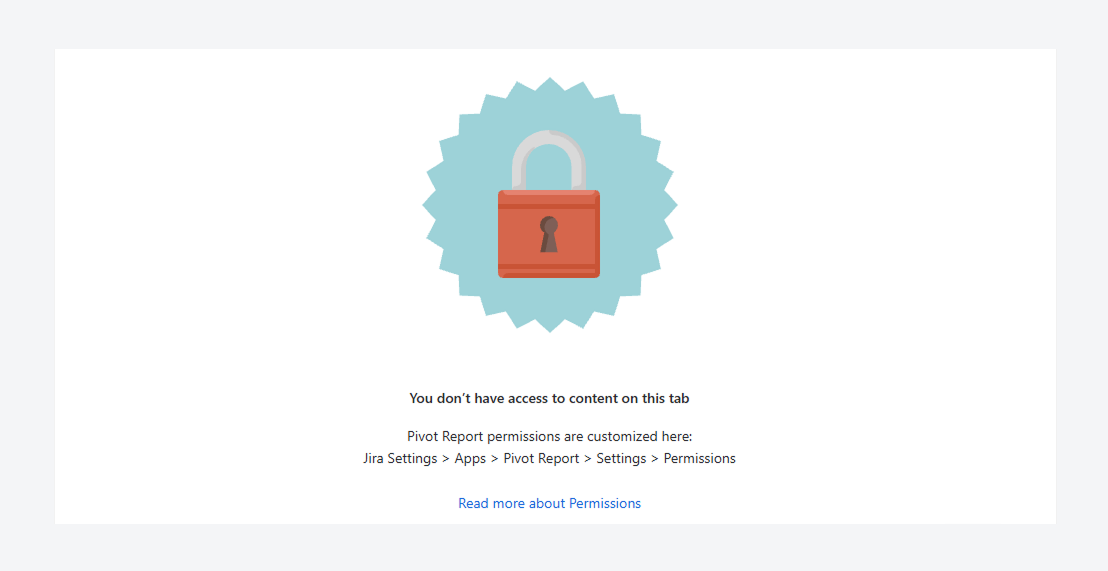
The error message above appears when the Worklogs tab type is hidden for all users or restricted to specific users. Users without access will see this message.
How can you hide or show the contents of the Worklogs tab?
There are three ways to restrict access to the Worklogs tab type. You can make it available to all users, restrict it to specific users or groups, or hide it entirely.
-
Always show: All users can view their own logged time and the worklogs of other users for the issues included in the report. This is the default setting when the app is installed.
-
Full access users only: Jira admins can specify which users or user groups have full access to the tab’s contents. If no users or groups are defined, all users can see the tab. Users without full access can only view their own worklogs.
-
Hide tab content: If you do not use time tracking, or if you rely on Jira’s native time tracking in the Work Item view, you can completely hide the Worklogs tab using this option.
How can you restore access to the tab’s contents?
If you've confirmed that you can’t access tab’s contents or can only access your own worklogs, follow these steps to restore access to all contents. You must either have Jira admin permissions or ask someone who does to complete the process.
-
Open the Settings menu in Jira’s top navigation bar, by clicking on the gear icon.
-
From the dropdown, choose Marketplace apps.
-
Within the Apps settings page, click on Settings from the list of Pivot Report configuration options.
-
On the Pivot Report Settings page, select the Permissions tab.
-
Navigate to the Worklogs tab restrictions section.
-
When the Full access users only option is being used, review the current entries in the Users and User Groups fields.
To remove a user or group, click the X icon next to their name. This restores their access to the app. -
Click inside the Users or User Groups field to open the search prompt.
The Users field lists all active users, and the User Groups field shows all available groups in your Jira instance. Any user or group you add will lose access to the app. -
Use the search box or select from recent results to add a user or group.
Alternatively, leave the fields empty if all User Groups and Users should have access to the app or select the Always show option.
After you update the settings in the Worklogs tab restrictions section, reload any browser pages that contain a report. This ensures the changes take effect.
Can you lose access to the contents as a report owner or admin?
Yes. Even a report owner or admin can lose access to the Worklogs tab’s contents. This happens when the Full access users only option is enabled and the user is not included in the Full access users list.
Can you lose access to the contents due to other factors?
Yes. Access to a report’s contents can also be affected by other factors, as explained in a related article. A Jira admin can verify whether a user has the required Jira and app permissions to view the full report, including access to the issue, filter, and any other report sources.
In comparison, restrictions applied to the Worklogs tab do not affect Jira permissions.
For example, you can limit access to the Worklogs tab to specific users or groups, while all users can still view worklogs in the Issue View.
If you have questions or need assistance, contact our support team via email or service desk. Our team is available Monday through Friday (9:00 AM to 7:00 PM GMT+7) to help with technical challenges or discuss improvements.